
Virtual Production Features coming to Unreal Engine 5
With the upcoming scheduled release for Unreal Engine 5 we thought it a good idea to look over the new virtual production features. Looking past the obvious Nanite and Lumen game changers and focusing in on specific Unreal Engine 5 virtual production pipeline improvements and changes.
nDisplay Integration Improvements
To start our list of virtual production improvements we have the growth of nDisplay integrations between both internal engine utilities and external plugin partners. A prime example of such a integration is the Stats Overlay allowing for typical UE workflow when working with projection policies. The main improvements are as follows:
- Stats Overlay: We’ve added the ability to support UE stats text fields overlay when using nDisplay Projection Policies.
- Procedural Mesh Policy: We’ve provided the necessary API calls to push arbitrary mesh data to Projection Policies and update in real-time while the cluster is running.
- Public Functions and Delegates: Call back and delegate functions have been added for Pre/Post/Tick specifically to further help and support media server integration.
nDisplay UX Improvements
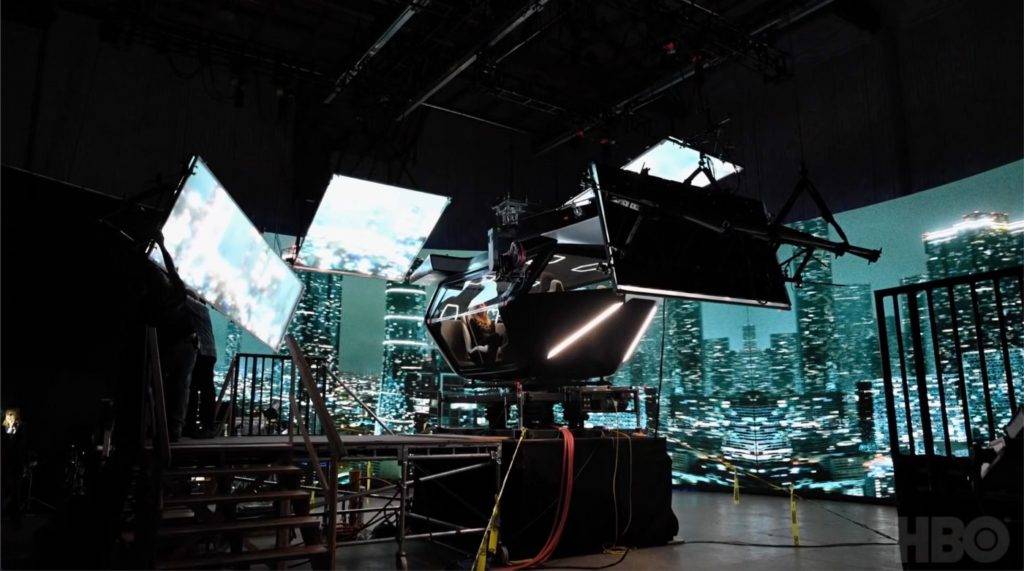
Epic has put an extensive focus on more user-friendly interfaces and improved visualisation formats in recent months for both nDisplay and ICVFX configs. This continues into the roadmap of Unreal Engine 5 with further developments of visualisation through the enabling of preview of the view frustum volumes and viewport border visualization. Epic also focuses down on further optimisations and fixed to the Root Actor in terms with the benefit of better performance and rendering accuracy. Key nDisplay UX improvements:
- Optimised in-level preview performance and rendering accuracy
- Per-Viewport post-process material
- Viewport border visualization
- View frustum volume visualization
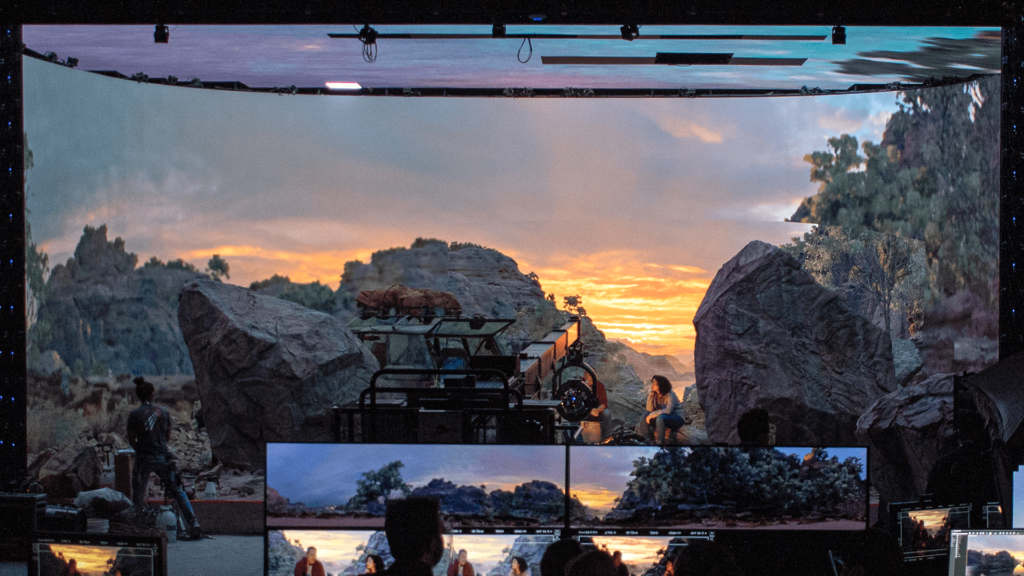
Frustum overscan for ICVFX
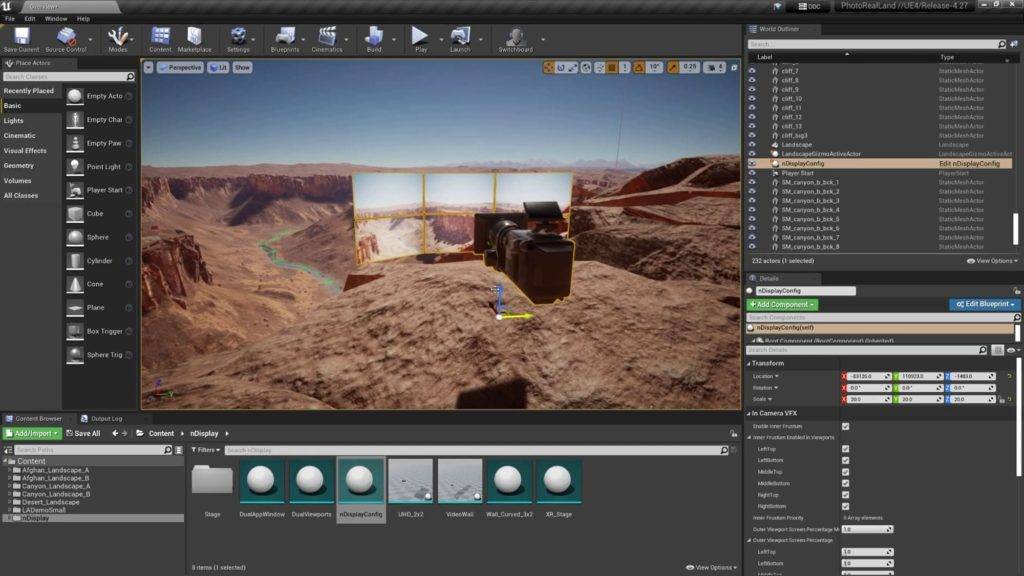
The existing FOV multiplier feature helped account for a camera that may move too quickly for the system latency to catch up, but Unreal Engine 5.0 introduces per-direction controls (left, right, top, bottom) for inner frustum overscan. This gives stage operators more sophisticated options for dialling in the size to match the needs of specific shots. such as:
- A whip pan in one direction, where the inner frustum overscan should only expand in that direction, rather than all around
- A two-camera shot where the cameras are very close on stage and must share the same inner frustum, expanded to account for the second view
- A shot that is occluded by a large set piece, where rendering what’s behind it is unnecessary and can save overhead for what is seen in camera
Operators can also choose to opt in or out of adapting the render resolution to the overscan values (vs. scaling), giving them the power to balance maximum image quality with performance at frame rate.
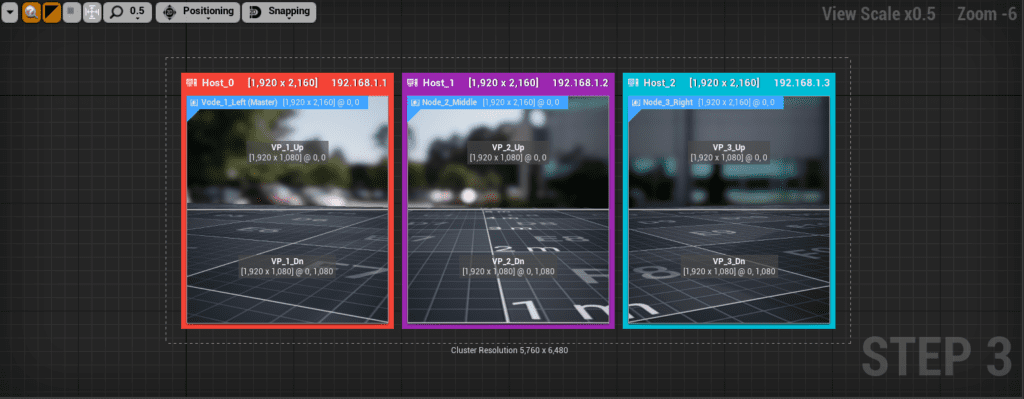
nDisplay viewport rotation for output mapping
nDisplay now supports the rotations of viewport outputs within the 3D Config Editor. This optimizes LED processor canvas usage and aids in the efficiency of node rendering and viewport configuration. Full support for the following rotations:
- Rotate 90 degree CW
- Rotate 90 degree CCW
- Rotate 180 degree
- Flip horizontal
- Flip vertical
nDisplay failover
Unreal engine 5 brings the introduction of nDisplay failover logic to displays and stages. Allowing clustered systems can gracefully recover from the most common failure types by allowing a render node to drop from the cluster. Users can also implement their own failover logic and alternatively use content from existing live backup nodes. Common failures include:
- Network discoverable: when a given PC crashes or fails to respond within a predefined timeout value, it is identified as a failed node and automatically drops from the cluster.
- Hardware (visual artefacts): non-fatal visual failures where the system is still responding from the network (e.g. memory corruption, bad output, render artefacts). Users can manually send a kill command to the failed node and it will drop immediately from the cluster.
- Content crash: this is when an Unreal Engine project crashes due to an unforeseen engine or content error on all PCs. This case is not currently handled and users will need to restart the whole cluster again.
For a full list of new features coming to unreal Engine 5 check out the Official Unreal Engine 5 Roadmap Documentation.
Article by:© On-Set Facilities












你必須登入才能發表留言。